
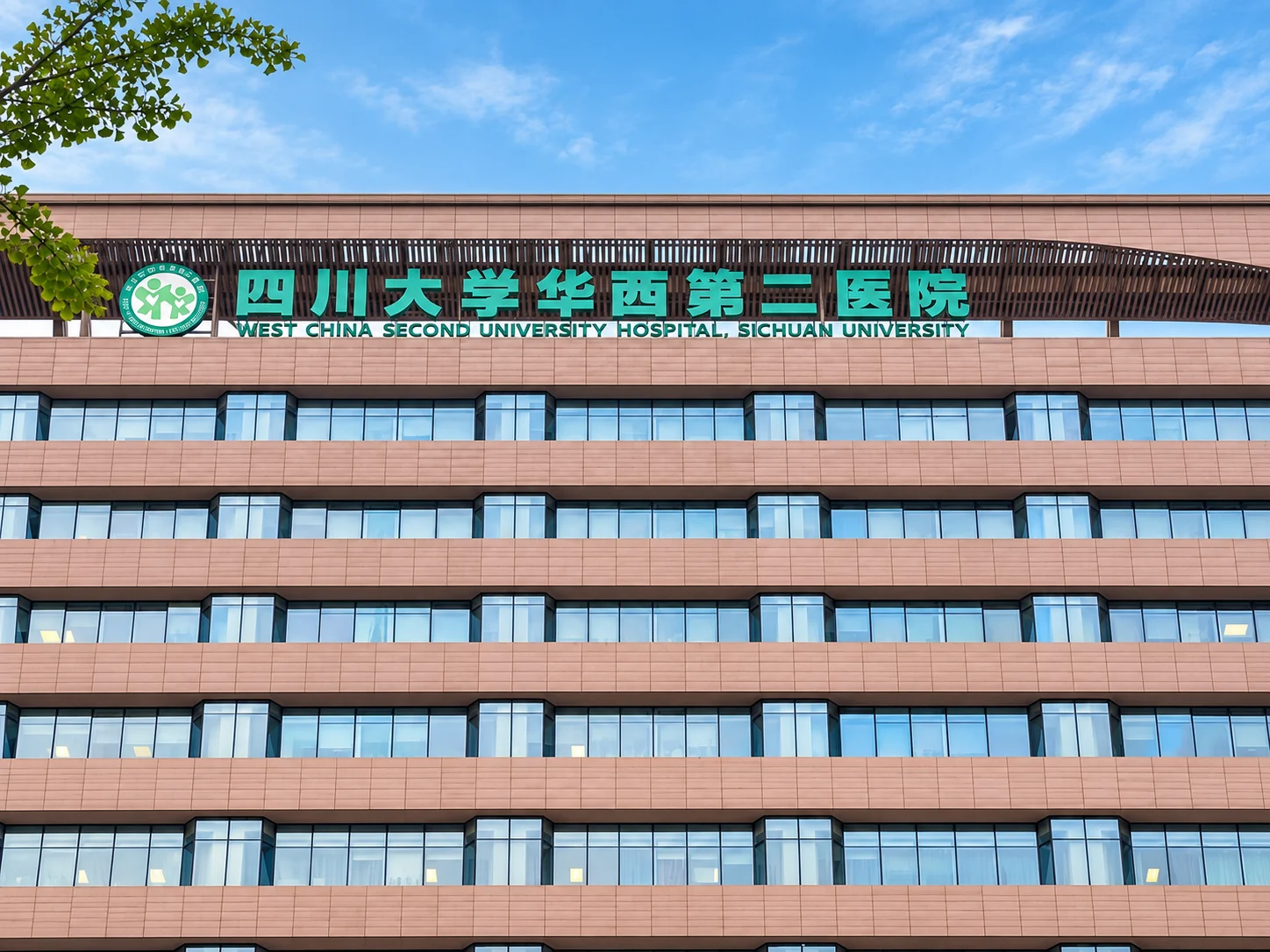
CELUVIN products are now available at the nutrition counter of West China Second University Hospital, Sichuan University, also known as West China Women’s and Children’s Health Hospital. For CELUVIN, this represents more than the addition of a new professional distribution setting. It marks an important step in extending the brand’s long-standing research framework around the hematopoietic system into women’s reproductive health, ovarian aging, assisted reproduction, and male reproductive health.
West China Second University Hospital is one of China’s leading specialist hospitals for women and children. Its obstetrics and gynecology and pediatrics disciplines are nationally recognized, while its reproductive medicine program has played a pioneering role in assisted reproduction in Sichuan. The hospital completed Sichuan Province’s first IVF birth in 1998 and its first PGT-associated third-generation IVF birth in 2020, and today maintains an integrated system spanning reproductive medicine, reproductive endocrinology, male reproductive medicine, sperm banking, and reproductive research.
For CELUVIN, entering this specialist nutrition setting reflects a broader evolution of the brand’s professional application scenarios. From cell-focused institutions, longevity clinics, and premium health-management centers to a leading women’s and children’s hospital, CELUVIN is bringing its hematopoietic-system-centered healthy-aging framework into increasingly specific areas of health management.
Why Would Hematopoietic-System Research Extend into Reproductive Health?
CELUVIN focuses on the hematopoietic system and explores systemic healthy aging by supporting hematopoietic function, with hematopoietic stem cells (HSCs) serving as the core scientific target.
Located primarily in the bone marrow, HSCs possess self-renewal and multilineage differentiation capacity. They sit upstream of red blood cells, platelets, and a broad range of immune-cell lineages. With advancing age, HSCs undergo functional and differentiation changes. One of the best-characterized features is an age-associated shift toward myeloid-biased hematopoiesis, accompanied by reduced lymphoid output.
A landmark 2024 study published in Nature showed that myeloid-biased HSCs become increasingly enriched with age. Selectively reducing these cells in aged animals restored several more youthful immune characteristics, including increased lymphoid progenitors, naïve T cells and B cells, together with improved adaptive immune responses.
This provides an important conceptual bridge between hematopoietic aging and reproductive health. HSCs do not directly become ovaries, oocytes, testes, or sperm. However, the hematopoietic system continuously generates and replenishes immune cells that participate in inflammatory regulation, immune surveillance, vascular remodeling, and tissue homeostasis throughout the body.
The relevant scientific question is therefore not whether a hematopoietic stem cell “turns into” a reproductive organ, but how age-related changes in hematopoiesis may reshape systemic immunity and inflammatory tone, and how those changes may subsequently influence local tissue microenvironments.
A Three-Profile Framework for Hematopoietic-System Aging
Hematopoietic-system aging is unlikely to be driven by a single biological process. As part of its ongoing research and product-development framework, CELUVIN groups major upstream drivers of hematopoietic aging into three research profiles.
These profiles are not clinical diagnoses and are not intended to classify disease. Instead, they provide a mechanism-based framework for understanding why similar hematopoietic-aging phenotypes may arise from different upstream biological pressures.
Type I: Inflammation–Metabolic Profile
Chronic low-grade inflammation, oxidative stress, and metabolic dysregulation can continuously influence the bone-marrow niche. Over time, this environment may interact with HSC self-renewal, lineage commitment, and age-associated myeloid skewing.
CELUVIN summarizes the nutritional-management direction for this profile as inflammation modulation—addressing the inflammatory and metabolic environment surrounding hematopoietic function.
Type II: Neuropsychological–Brain–Gut Axis Profile
Bone marrow is not isolated from the nervous system, endocrine signaling, sleep, stress, or gut–immune communication. Chronic psychological stress, circadian disruption, neuroendocrine changes, and altered brain–gut–immune signaling may all influence hematopoietic regulation through interconnected neural, hormonal, and inflammatory pathways.
For this profile, the central concept is soothing and stress regulation, with particular attention to sleep, stress adaptation, and neuroimmune balance.
Type III: Damage–Quality-Control Decline Profile
Aging HSCs also accumulate intrinsic cellular damage. DNA damage, oxidative injury, mitochondrial dysfunction, impaired autophagy, and declining proteostasis can progressively weaken the cell’s own maintenance and quality-control systems.
For this profile, CELUVIN emphasizes repair support—supporting cellular maintenance, mitochondrial function, and internal quality-control processes.
Together, the concepts of inflammation modulation, soothing, and repair support form CELUVIN’s three-direction research framework for hematopoietic-system aging. They are not intended as isolated product claims, but as a way to break a complex aging process into researchable biological dimensions.
From the Hematopoietic System to the Ovary
Female reproductive aging has traditionally been discussed primarily in terms of declining follicle number and oocyte quality. Increasingly, however, research is examining the ovarian microenvironment itself.
The aging ovary is associated not only with follicular depletion but also with changes in immune-cell composition, inflammatory signaling, oxidative stress, extracellular matrix remodeling, mitochondrial function, and cellular senescence.
Experimental work has shown that ovarian aging and follicular depletion are accompanied by changes in CD4⁺ T cells, B cells, macrophages, and inflammatory pathways involving IL-1, TNF-α, IL-6, and NLRP3. Other research has emphasized that macrophages, lymphocytes, stromal cells, and vascular components all participate in the ovarian environment that supports follicular development, ovulation, luteal formation, and tissue repair.
Some ovarian macrophage populations are also linked to bone-marrow-derived circulating monocytes, providing an additional biological connection between hematopoiesis, circulating immunity, and the ovarian microenvironment.
This does not mean that hematopoietic aging is the sole driver of ovarian aging. Genetics, endocrine function, chronological age, mitochondrial health, metabolism, and lifestyle remain fundamental determinants of female reproductive health. Rather, hematopoietic and immune aging provide an additional systems-level perspective through which reproductive aging can be studied.
Assisted Reproduction Is Also an Immune Environment
Successful assisted reproduction is not defined by oocyte retrieval and embryo transfer alone. Ovarian response, oocyte quality, sperm quality, embryo development, endometrial receptivity, and the maternal–fetal immune environment all contribute to implantation and subsequent pregnancy outcomes.
Uterine natural killer cells (uNK cells), for example, are the predominant lymphocyte population in the implantation-phase endometrium and early decidua. They participate in trophoblast invasion and spiral-artery remodeling. Large systematic reviews have reported differences in endometrial CD56⁺ uNK populations in subsets of patients with recurrent miscarriage or recurrent implantation failure.
Importantly, reproductive immunology is not simply a question of making immunity “stronger.” Peripheral-blood NK cells are not equivalent to uterine NK cells, and a single NK-cell measurement cannot by itself predict pregnancy outcomes. The more relevant concept is immune balance: the appropriate cell, in the appropriate location, performing the appropriate function at the appropriate time.
Male Reproductive Health Also Depends on the Local Immune and Redox Environment
The same systems-level logic applies to male reproductive health.
Testicular macrophages are among the major immune-cell populations within the testicular microenvironment. Current research shows that they participate not only in immune regulation, but also in Leydig-cell function, steroidogenesis, Leydig-cell regeneration, spermatogonial differentiation, and the maintenance of an environment compatible with normal spermatogenesis.
Oxidative stress is another major area of male-reproductive research. Mature sperm have very limited DNA-repair capacity, while their membranes are rich in polyunsaturated fatty acids and are therefore particularly vulnerable to oxidative damage. Persistent redox imbalance may affect sperm motility, membrane integrity, mitochondrial performance, and DNA quality.
From CELUVIN’s systems perspective, male reproductive health can therefore be studied along a broader pathway linking hematopoietic and immune balance, systemic inflammatory and oxidative stress, the local testicular microenvironment, and spermatogenesis.
A Research-First Approach to Reproductive Health
For CELUVIN, which defines itself as a serious, science-led supplement brand, scientific boundaries and evidence standards remain more important than aggressive efficacy claims.
CELUVIN does not equate nutritional support with the treatment of premature ovarian insufficiency, nor does it currently claim that its products directly increase IVF success rates. Instead, the brand intends to continue building human data around underlying reproductive-health parameters, including ovarian reserve, inflammatory and immune status, oxidative stress, and male reproductive indicators.
The longer-term objective is to work with clinicians, research teams, and professional institutions to translate mechanistic research into observations that can be measured, retested, and progressively validated in real-world populations.
From hematopoietic-system research and an “assessment–intervention–reassessment” framework, to scientific collaboration with the Jinan University Pharmaceutical Biotechnology R&D Center, and now to availability at West China Second University Hospital, CELUVIN continues to bring hematopoietic-system research into increasingly professional and specific health-management settings.
The applications are expanding, but the scientific core remains unchanged: focusing on the hematopoietic system, supporting hematopoietic function as a systemic healthy-aging pathway, taking hematopoietic stem cells as the core scientific target, and continuously refining the answers through research and human data.
This is how CELUVIN interprets its long-term mission: Redefining Anti-Aging with Science.
References
Ross JB, Myers LM, Noh JJ, et al. Depleting myeloid-biased haematopoietic stem cells rejuvenates aged immunity. Nature. 2024;628:162–170. DOI: 10.1038/s41586-024-07238-x.
Lliberos C, Liew SH, Zareie P, et al. Evaluation of inflammation and follicle depletion during ovarian ageing in mice. Scientific Reports. 2021;11:278. DOI: 10.1038/s41598-020-79488-4.
Isola JVV, Hense JD, Osório CAP, et al. Reproductive Ageing: Inflammation, immune cells, and cellular senescence in the aging ovary. Reproduction. 2024;168(2):e230499. DOI: 10.1530/REP-23-0499.
Guo Y, Xue L, Tang W, et al. Ovarian microenvironment: challenges and opportunities in protecting against chemotherapy-associated ovarian damage. Human Reproduction Update. 2024;30(5):614–647. DOI: 10.1093/humupd/dmae020.
Von Woon E, Greer O, Shah N, et al. Number and function of uterine natural killer cells in recurrent miscarriage and implantation failure: a systematic review and meta-analysis. Human Reproduction Update. 2022;28(4):548–582. DOI: 10.1093/humupd/dmac006.
Piprek RP, Kloc M, Porebska K, et al. Origin and Role of Testicular Macrophages in Testis Development, Steroidogenesis, and Spermatogenesis. Results and Problems in Cell Differentiation. 2024;74:137–157. DOI: 10.1007/978-3-031-65944-7_5.
Feuz MB, Nelson DC, Miller LB, et al. Reproductive Ageing: Current insights and a potential role of NAD in the reproductive health of aging fathers and their children. Reproduction. 2024;167(6):e230486. DOI: 10.1530/REP-23-0486.