
Optional informational assessment
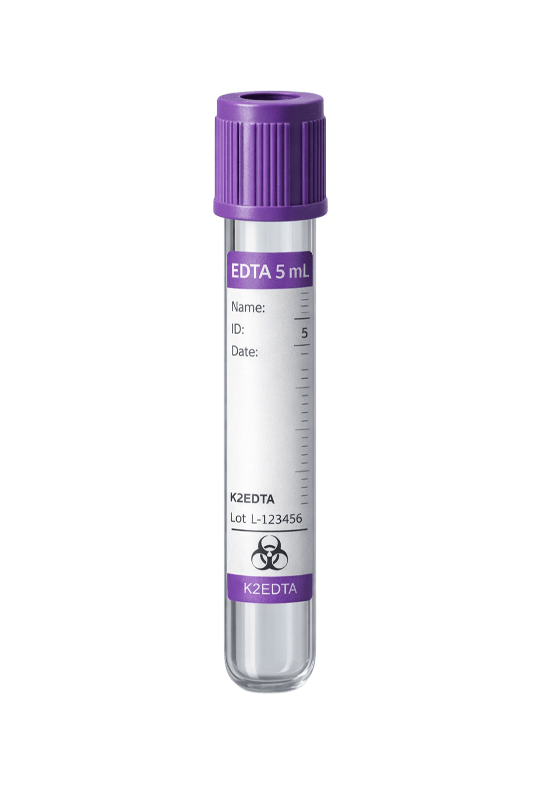
An optional assessment of age-related patterns in blood-cell lineage balance, using approximately 5 mL of peripheral blood.
What is assessed
A Pattern in Blood-Cell Lineage Balance
Hematopoietic stem cells give rise to both myeloid and lymphoid cell lineages. With normal aging, hematopoiesis can become more myeloid-biased while lymphoid output declines. CELUVIN’s assessment examines selected peripheral-blood cell populations and their relative balance as an indirect view of this age-related pattern.
More balanced lineage pattern
The body is generally better positioned to maintain adaptive immune responses and recover from everyday immune challenges.
Illustrative age-related trend — not an individual prediction. Research basis: Pang et al., 2011; Rundberg Nilsson et al., 2016.
Lineage context
Myeloid and Lymphoid Lineages
Myeloid lineage
Includes cells involved in rapid, broad innate responses, oxygen transport and clotting. Age-related increases may contribute to a more inflammatory hematopoietic profile.

- Red blood cells
- Platelets
- Granulocytes
- Monocytes / macrophages
Lymphoid lineage
Includes T cells, B cells and NK cells involved in adaptive and immune-surveillance functions. Age-related reductions may be associated with weaker adaptive immune output.

- T cells
- B cells
- NK cells
- Plasma cells
Cell illustrations adapted from A. Rad and Mikael Häggström, M.D. under CC BY-SA 3.0.
Four careful steps
How It Works
- 01
Sample
Approximately 5 mL of peripheral blood is collected by an appropriate provider.
- 02
Measurement
Selected myeloid- and lymphoid-lineage cell populations are measured.
- 03
Interpretation
Relative balance is reviewed in the context of age-related hematopoietic patterns.
- 04
Follow-up
When appropriate, results may be compared over time alongside other health information.
Role in the CELUVIN approach
Recommended for Context. Not Required for Product Use.
The assessment can provide a baseline for people who want an additional data point before or during a healthy-aging program. It is optional. Individuals may review CELUVIN formulas without undergoing the assessment.
Interpretation discipline
What Results Can—and Cannot—Say
- The assessment does not directly count or isolate hematopoietic stem cells. It is not a diagnosis, a stand-alone measure of biological age, or a substitute for clinical evaluation.
- A report can describe the measured cell populations and their relative proportions.
- A single result cannot establish disease, immune competence, remaining lifespan or a precise blood age.
- A change in ratio cannot automatically be attributed to a CELUVIN product; timing, testing conditions, health status and other interventions matter.
- A qualified healthcare professional should interpret abnormalities or clinical concerns.