
As anti-aging advances from single-ingredient narratives and subjective experience toward mechanistic research, human data, and longitudinal validation, scientific rigor is becoming a central measure of a brand’s long-term value. For CELUVIN, science is not a layer of “endorsement” added after a product is completed. It is the R&D framework that guides the entire process—from research direction and target selection to ingredient screening, formulation design, testing, retesting, and continuous iteration.
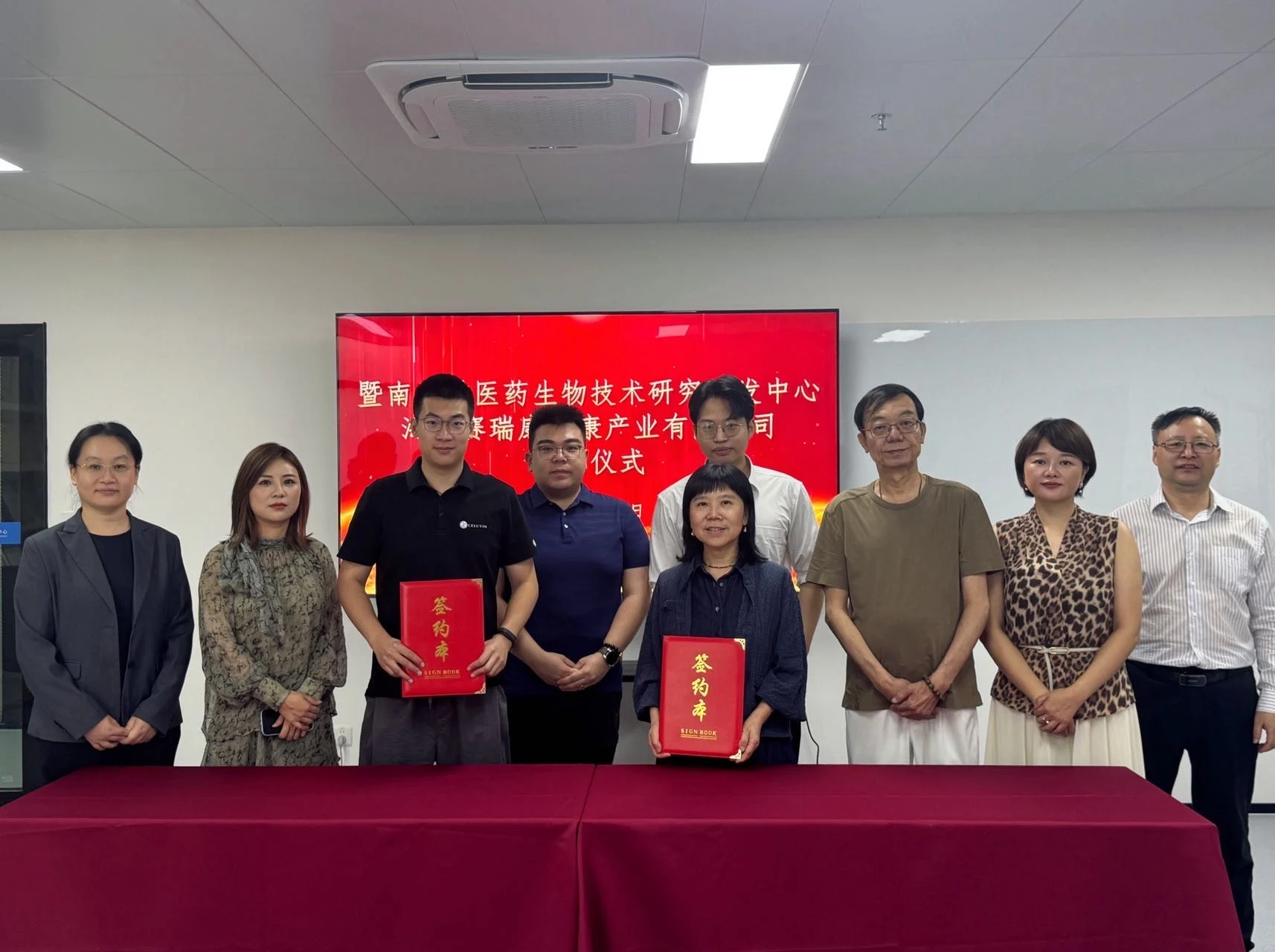
Recently, CELUVIN formally signed a collaboration agreement with the Guangzhou Jinan University Pharmaceutical Biotechnology Research and Development Center (hereinafter referred to as the “Jinan University Pharmaceutical Biotechnology R&D Center”). The two parties will combine CELUVIN’s experience in hematopoietic-system-focused anti-aging, science-led formulation, and real-world data accumulation with the Center’s capabilities in bioactive peptides, functional botanicals, biological fermentation, human observational research, and research translation, with the aim of advancing product development in scientific anti-aging and long-term healthy aging management.
One of the key product initiatives arising from this collaboration is the CELUVIN Hongyuan Dual-Chamber Drink. This does not represent a change in the brand’s core direction. Rather, it extends CELUVIN’s long-standing focus on the hematopoietic system and hematopoietic stem cells as a core scientific target into additional areas including sleep, antioxidant support, collagen support, skin condition, and inside-out healthy aging management.
Starting with the Hematopoietic System: Targeting the Source of Blood Formation—Hematopoietic Stem Cells
From the outset, CELUVIN chose a research path distinct from conventional anti-aging products: focusing on the hematopoietic system and exploring systemic anti-aging by supporting hematopoietic function. Within this framework, hematopoietic stem cells (HSCs) sit upstream of the blood and immune systems and give rise to red blood cells, platelets, and multiple immune-cell lineages. For this reason, they have become the brand’s core scientific target.
With age, the function and differentiation patterns of hematopoietic stem cells gradually change. One of the most extensively studied features is myeloid skewing accompanied by reduced lymphoid output. These changes have been widely linked in aging research to immunosenescence, chronic low-grade inflammation, and age-related declines in recovery capacity. CELUVIN aims to study how these upstream changes can be quantified, how they may be addressed through long-term nutritional management, and whether post-intervention trends can be continuously monitored through repeat testing.
It is important to make one point clear: CELUVIN has never been an “oral stem cell” product. Its products contain no live hematopoietic stem cells and do not attempt to supplement, transplant, or deliver stem cells into the body through oral intake. CELUVIN studies how the body’s own hematopoietic system changes with age and explores how science-based nutrition and long-term management may support hematopoietic function. Hematopoietic stem cells are the core target because they sit at the source of blood formation and the immune system. Put simply, CELUVIN studies the aging of hematopoietic stem cells; it does not ask consumers to “eat stem cells.”
From Mechanistic Research to Real-World Data: More Than 1,000 Assessments and Ongoing Retesting
Scientific anti-aging cannot rely solely on the feeling that someone “feels better.” Around hematopoietic-system aging, CELUVIN has gradually established a long-term “assessment–intervention–reassessment” observation framework. To date, the brand has conducted more than 1,000 assessments related to hematopoietic-system aging and HSC aging. Peripheral-blood flow cytometry data are used to examine myeloid, lymphoid, and related immune-cell structures and are then combined with an assessment model to quantify trends in age-related shifts in hematopoietic differentiation.
The underlying flow-cytometry data are provided by Sichuan West China-Kindstar Medical Laboratory. The assessment is not a disease diagnosis, nor does it directly measure the number of hematopoietic stem cells in peripheral blood. Instead, it uses changes in downstream cell populations to establish a repeatable quantitative reference for aging trends within the hematopoietic and immune systems.
Among clients who have completed a defined intervention cycle and have comparable follow-up data, approximately 80% have shown an improving trend in relevant hematopoietic-aging indicators. CELUVIN classifies these results as real-world assessment and follow-up data. Their value lies in moving product evaluation beyond subjective experience toward objective trend monitoring, while also building the sample base and methodology for more standardized, longer-term, and higher-quality human research in the future.
Jinan University Pharmaceutical Biotechnology R&D Center: From Patented Technologies and Animal Studies to Human Observation
Established in 1999, the Jinan University Pharmaceutical Biotechnology R&D Center has long conducted research in bioactive proteins and peptides, functional botanicals, biological fermentation, and the industrial translation of scientific research. One of the key values of this collaboration is that it connects CELUVIN’s existing hematopoietic-system research platform with the Center’s capabilities in bioactive discovery, experimental validation, human observation, and product translation.
One example is a novel royal jelly peptide that is a key focus of the collaboration. The Jinan University Pharmaceutical Biotechnology R&D Center has obtained an invention patent titled “A Royal Jelly Peptide, Its Preparation Method, and Its Application in Improving Sleep.” The research began with simulated gastrointestinal digestion and mass-spectrometry screening of royal jelly, followed by genetic-engineering-based expression and purification of the target peptide. It was then advanced into animal studies and a human observational study, with continued tracking of indicators including early awakening, difficulty falling asleep, light sleep, nighttime awakenings, and daytime mental state.
Hongyuan Dual-Chamber Drink: Connecting Two Research Pathways in One Product
The CELUVIN Hongyuan Dual-Chamber Drink is built around two complementary R&D pathways. The upper chamber continues CELUVIN’s established hematopoietic-system research framework, using support for hematopoietic function as its anti-aging pathway and hematopoietic stem cells as the core scientific target. The lower chamber is jointly developed by CELUVIN and the Jinan University Pharmaceutical Biotechnology R&D Center, incorporating research directions with patent and experimental foundations—including royal jelly peptides and fermented coix seed—to explore sleep, antioxidant support, skin brightening and radiance, collagen support, and inside-out healthy aging.
Accordingly, the concept of “supporting the source in the upper chamber and supporting radiance in the lower chamber” is not simply a matter of placing two consumer ideas into one package. “Source support” looks to the hematopoietic system and the source of blood formation as an internal foundation of youthful vitality, while “radiance support” extends research toward aspects consumers can more readily perceive, including sleep, complexion, skin condition, and recovery. The Hongyuan Dual-Chamber Drink is not intended only for the beauty market; it can also continue to serve CELUVIN’s established settings, including cell-focused institutions, longevity clinics, and professional health-management organizations.
CELUVIN: Defining a New Standard for Anti-Aging Through Science
The aging of the hematopoietic system and its nutritional modulation remain active and evolving areas of scientific research. At the same time, hematopoietic stem cell aging, myeloid skewing, declining lymphoid output, and their relationships with immunosenescence and chronic low-grade inflammation have become important topics in modern geroscience. For CELUVIN, what matters is not to declare a final answer prematurely, but to translate basic research step by step into products and health-management systems that can be observed, quantified, retested, and continuously validated.
Toward this goal, CELUVIN has progressed from foundational research on the hematopoietic system, core-ingredient screening, and science-led formulation to more than 1,000 real-world assessments and repeat tests. Its formal collaboration with the Jinan University Pharmaceutical Biotechnology R&D Center further brings patented technologies, animal studies, human observation, and translational research capabilities into the R&D framework. Looking ahead, CELUVIN will continue to advance more standardized human studies with larger sample sizes and longer follow-up periods, so that each product iteration is supported by new scientific evidence and real-world data.
For CELUVIN, “defining a new standard for anti-aging through science” does not mean replacing one concept with a newer one. It means establishing a more rigorous framework for evaluation: Are the mechanisms clear? Is the core target well defined? Can the product rationale be explained? Can changes in humans be quantified? Can intervention outcomes be retested? Can long-term data withstand continued validation? By remaining focused on the hematopoietic system, taking hematopoietic stem cells—the source of blood formation—as its core scientific target, and continuously refining its answers through research and data, CELUVIN is building the scientific anti-aging pathway it intends to pursue for the long term.